

Certified Sewer Scoping Services in Kern County
Book your sewer scope inspection today and get HD video footage, detailed defect mapping, and a full written report, delivered the same day before hidden damage becomes a deal-breaker.
Our Sewer Inspections Show What Standard Home Inspections Miss
A sewer scope inspection can save you from a $10,000 to $30,000 surprise, but only if it’s done by someone who has no financial interest in the repair. At Greenhorn Breckenridge, LLC, our inspectors identify root intrusion, cracks, bellied pipes, offsets, and pipe deterioration that standard home inspections will never cover. We also work with property managers, landlords, and investors who need sewer line scoping between tenants, before lease renewals, or as part of routine property maintenance.
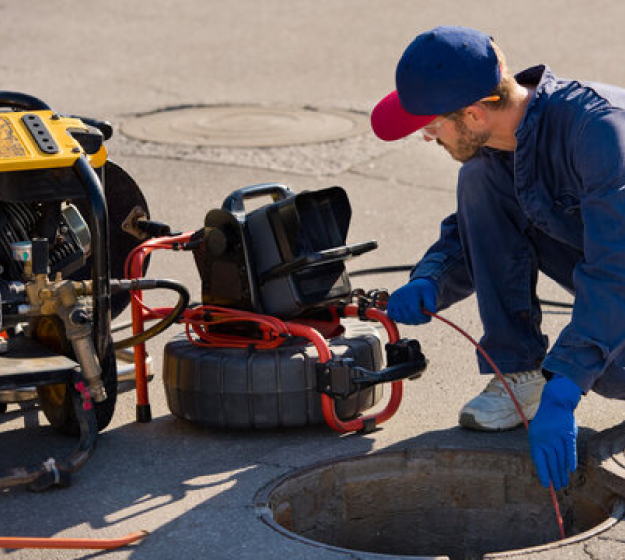
Our camera travels the entire sewer lateral from your foundation to the city main or septic tank, recording HD footage in real time while each defect is logged with exact distance readings along the line. You receive the full video recording, still images of every flagged issue, and a written report with findings and recommendations before the day is over. The process takes under an hour and can be scheduled alongside a general home inspection or booked on its own. One visit, one report, and you have everything you need to move forward with clarity.
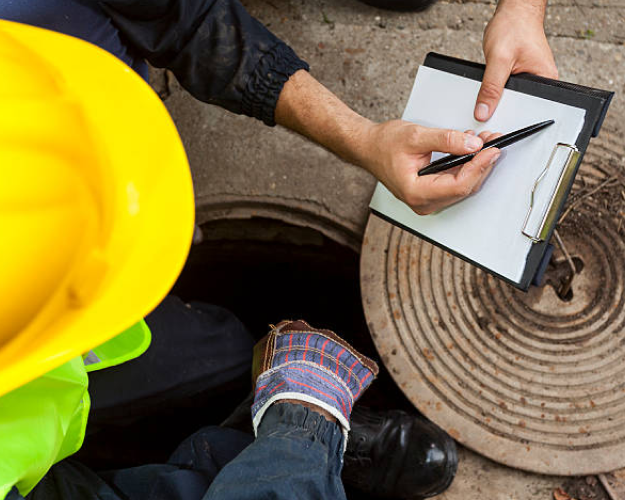
Sewer Line Scoping for Homes, Rentals & Commercial Properties
Our sewer scoping Kern County, CA services are not limited to one property type. We inspect residential homes before purchases and listings, rental properties during tenant turnovers, and commercial buildings where a sewer failure doesn’t just cost a repair bill, it costs business. Our team brings the same certified process to every job and adjusts the inspection to the specific demands of the property.
- Buying a home with original sewer lines
- Selling before a buyer’s inspector finds it first
- Recurring backups or slow drainage
- Mature trees near the sewer lateral
- Septic systems not scoped in over two years
- Commercial buildings with high-volume water usage
For residential properties, our sewer scoping services focus on pipe age, material condition, tree root penetration, and settlement damage that builds up unnoticed over decades in Kern County soil. On commercial properties, Greenhorn accounts for higher water volume, grease accumulation, shared lateral connections, and the operational risk a single backup creates when it shuts down a business mid-day.
Sewer Pipe Types We Inspect Across Kern County
Orangeburg Pipe
Orangeburg lines appear frequently in homes built between the 1940s and 1970s. These tar-paper pipes absorb moisture and deform over time. Our team assesses collapse risk and material failure before they reach the emergency stage.
Clay Pipe
Clay sewer lines were standard in Kern County homes built before the 1980s. At Greenhorn, we check every hub joint for root intrusion, cracking from soil movement, and separation from decades of ground settling.
Cast Iron Pipe
Mid-century homes and older commercial buildings are where our inspectors most commonly encounter cast iron lines. The inspection focuses on internal corrosion, rust scale buildup, wall thinning, and channeling that signal approaching failure.
PVC Pipe
Most construction from the 1980s onward uses PVC, and while more durable, Greenhorn still finds problems. We check for joint separation, bellied sections from soil movement, and stress fractures that develop over time.
ABS Pipe
ABS plastic lines are common across California residential construction. Key concerns include joint failures, chemical degradation, and cracking at connection points caused by prolonged Kern County heat and soil pressure.
Galvanized Steel Pipe
Some older Kern County properties still rely on galvanized steel sewer lines with limited remaining lifespan. Our experts identify internal corrosion, mineral buildup restricting flow, and weakened sections where the protective coating has broken down.
How We Inspect Your Sewer Lines
Scheduling & Preparation
We confirm property details, locate your sewer cleanout, and schedule the inspection around your timeline.
Full Line Camera Inspection
Our inspector scopes the full sewer lateral with an HD camera, logging every defect with precise measurements in real time.
Same-Day Report Delivery
You receive a same-day report with video, still images, and prioritized recommendations ready for your agent or contractor.
Post-Inspection Support
Our team stays available to explain findings, answer questions, and help coordinate your next steps.
Why Kern County Homeowners Trust Greenhorn Breckenridge
We’re known for Integrity & Quality!
Unbiased Reporting
Every finding and recommendation in our reports serves your decision. Our inspectors assess the line, document the condition, and deliver results that stand on their own.
Veteran-Owned
Discipline, honesty, and accountability are the foundation of our company. Every inspection reflects the standard of service our team was trained to uphold.
InterNACHI-Certified & Mold IA2C-Certified
Greenhorn Breckenridge holds both InterNACHI and Mold IA2C certifications. Every sewer scope inspection follows InterNACHI’s established standards of practice.
Flexible Scheduling
Our team offers standalone sewer scope appointments or bundles them with a general home inspection. We schedule around your timeline and keep the process efficient.
Professional detection and analysis of radon gas levels, helping you ensure safe indoor air quality for your family.
Multi-Property Coordination
Investors and property managers with multiple units across Kern County can schedule coordinated inspections. We handle the logistics, so you get all your reports efficiently.
Specialized inspections for manufactured homes, checking structure, utilities, and safety systems for long-term confidence.
Pre-Purchase Inspections
Lorem ipsum dolor sit amet, consectetur adipiscing elit. Ut elit tellus, luctus nec ullamcorper mattis, pulvinar dapibus leo.
Why Clients Choose Greenhorn Breckenridge
No Cost Surprises
Keep Doors Open
Stay Code-Safe
A Problem You Can't See Is Still A Problem!
Every week you wait, the damage gets worse. Our schedule fills fast during peak buying season.
Protect Your Investment Before It’s Too Late!
Frequently Ask Questions
A sewer scope inspection uses a small camera fed through your main sewer line to check for damage, blockages, root intrusion, and pipe deterioration. Greenhorn Breckenridge records the entire inspection in HD video and documents every finding with precise location markers, so you know what's there and where it sits.
Sewer problems like cracks, root intrusion, and sagging pipes often develop underground for years without any visible signs above ground. Our inspectors find these conditions regularly in Kern County homes where everything appears to drain normally. A sewer scope catches them before they turn into emergency repairs.
Schedule one before buying or selling a home, when you notice slow drains or recurring backups, or if your property has mature trees near the sewer lateral. For older homes with Orangeburg, clay, or cast iron pipes, we recommend scoping every two years to stay ahead of material failure.
Most sewer scope inspections run a few hundred dollars, which is a fraction of a line replacement that can cost thousands of dollars. Pricing depends on access and property type. Contact us for a free quote specific to your property.
Common findings include root intrusion, cracks, collapsed sections, bellied pipes, misaligned joints, grease buildup, and deteriorating pipe materials.